
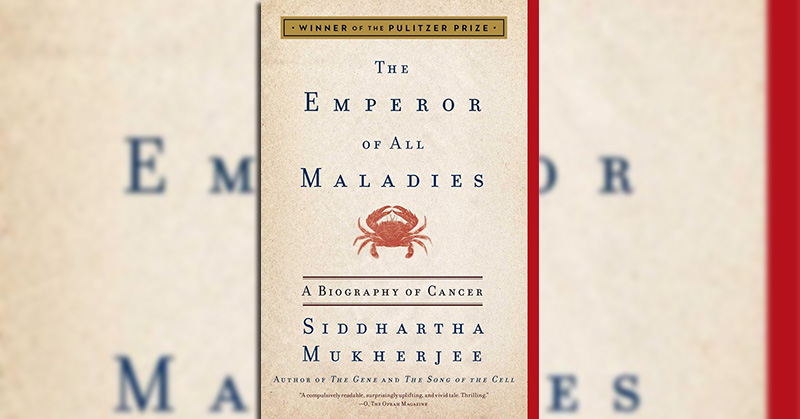
De arts en leukemie-onderzoeker Siddhartha Mukherjee (40, foto), van het kankercentrum van Columbia University, schreef The Emperor of all Maladies: A Biography of Cancer (Scribner 2010). Het is een heel goed en lezenswaardig boek.
door Jan Willem Nienhuys (20/01/2011)
OP bijna 500 pagina’s (exclusief voorwoord, noten, literatuur en index) beschrijft hij de ontwikkeling van de behandeling van kanker. Dat is niet alleen chirurgie, maar ook bestraling en chemotherapie. Verhalen over patiënten in het verleden wisselen af met ervaringen met patiënten die hij zelf behandeld heeft. Niet alleen behandeling komt aan de orde, maar ook onderzoek naar het wezen van kanker. Mukherjee maakt de lezer duidelijk hoe recent het inzicht eigenlijk is dat kanker een ziekte is van het DNA. Het gaat meestal niet om een enkele beschadiging maar om een serie mutaties die gezamenlijk veroorzaken dat een cel van het lichaam zich alsmaar begint te delen, dat de remmen op dit proces worden uitgeschakeld, ook de noodrem (zelfvernietiging van de cel), en dat de cellen onsterfelijk worden en verder dat het gezwel zichzelf voorziet van bloedvaten en aan de wandel gaat. Maar dat zijn allemaal beschadigingen van zeer belangrijke genen, zo is het uitzaaien van kanker het gevolg van een corruptie van een gen dat normaal gesproken immuuncellen hun beweeglijkheid geeft.
Ook vertelt hij over de manier waarop in de VS de strijd tegen kanker werd georganiseerd door bijvoorbeeld Mary Lasker, die vanaf ongeveer 1945 de American Cancer Society omvormde van een bedaagde oudeherenclub tot een dynamische fondsenmagneet die een Manhattanplan voor kanker eiste. We horen van de National Cancer Act (VS) van 1971 en de Oorlog tegen Kanker (die gestart werd zonder duidelijk begrip van wat kanker is, en met aanzienlijk minder geld dan echte oorlogen, maar wel met de hoop op een snelle victorie) en nog veel meer.
Het boek groeide uit een vraag van een kankerpatiënte (2005) naar goede voorlichting. Mukherjee realiseerde dat er eigenlijk geen goed boek over dat onderwerp bestond, dus schreef hij het zelf maar. Zoals hij zegt: ‘I wrote the book, because it wasn’t there.’
Als men kijkt naar wat er op het gebied van alternatieve kankergenezerij te vinden is, dan ziet men met de kennis van dit boek al gauw waarom verreweg het meeste op dit gebied onzin is. Kanker is ontspoord DNA, dus therapieën die berusten op het idee dat het door psychologische oorzaken komt, of te veel of te weinig van deze of gene stof, die kan men meteen vergeten. Kankercellen hebben geen speciale oppervlaktekenmerken waardoor het immuunsysteem ze als vreemd en vijandig kan aanmerken. Kanker is ook niet één enkele ziekte (er kan heel veel fout gaan met het DNA), en dat er één enkel middel kan zijn is een fictie. Als men zich realiseert hoe intens er op allerlei manieren gezocht wordt naar middelen tegen kanker, en hoeveel werk het is voor een veelbelovend idee tot duidelijke resultaten leidt, gelooft men niet zo makkelijk in wonderdoeners die aan komen zetten met een of ander plantje of eenvoudig recept met simpele stofjes. En als men ziet hoe lang sommige onwerkzame therapieën van goedbedoelende artsen in zwang blijven door een schijn van werkzaamheid, die hoeft zich geen illusies te maken over wonderverhalen van amateurgenezers.
Chemotherapie heeft een slechte naam vanwege de bijwerkingen, maar de nieuwere middelen worden gemaakt op basis van inzicht in hoe de kankercel functioneert. De cel is namelijk op een heel bepaalde manier ontspoord. Het beschadigde DNA maakt vaak foute enzymen aan, en die enzymen kan men platleggen door het vervaardigen van chemische sleutels die alleen op zo’n fout enzym passen. Waar de oudere chemotherapeutica domweg alle celdeling blokkeerden, werken de nieuwe middelen veel gerichter.
Dit boek vertelt het verhaal van de strijd tegen kanker vooral gezien vanuit Amerika. Eén aspect dat ik gemist heb is de rol van reparatie-enzymen. Onder normale omstandigheden gaat er in elke lichaamscel ongeveer 20 maal per seconde iets kapot in het DNA. Dat wordt bijna allemaal gerepareerd op diverse manieren. Als er teveel kapot gaat (door chemische reacties al dan niet veroorzaakt door ioniserende stralen) kan de reparatie het niet meer bijhouden, maar als het stukje DNA dat codeert voor reparatie-enzymen zelf kapot gaat, dan gaat het natuurlijk mis met repareren. Daar zou ik graag meer over gelezen hebben. Erfelijke vormen van kanker hangen ermee samen. Veel is er niet over bekend, zie verder: DNA repair genes and cancer, en idem deel twee.
Het boek verschijnt op 9 februari 2011 in Nederlandse vertaling, maar de Engelse softcovereditie is spotgoedkoop (16,95 euro) voor een boek van die omvang.
Op internet zijn diverse interviews met Mukherjee te vinden, bijvoorbeeld:
Met Charlie Rose (24 november 2010) (dode link) (Noot: transcript hiervan helemaal onderaan deze post)
Met Jim Glassman (23 december 2010, met transcript) (Noot: het transcript heb ik als laatste reactie hieronder toegevoegd, omdat de video langzaam laadt.)
Op sidmukherjee.com zijn korte vignetten te vinden van alle betrokken personen. Op de rest van die website ook een tijdlijn, links naar recensies en dergelijke.
Ik geef hieronder een korte min of meer chronologische lijst van belangrijke gebeurtenissen in de geschiedenis van kanker, met nadruk op resultaten van wetenschappelijk onderzoek. Het staat bijna allemaal en veel uitvoeriger in het boek.
2625 v.C.: Beschrijvingen van kanker komen op een Egyptisch papyrus voor. Omdat kanker voornamelijk bij ouderen voorkomt, werd deze ziekte pas in de 20ste eeuw een belangrijke doodsoorzaak. Volgens Galenus was de oorzaak ‘zwarte gal’, maar pas aan het eind van de 18de eeuw werd de zwarte gal naar het rijk der fabelen verwezen.
1845-1847: Eerste beschrijving van leukemie door Bennet en later Virchow.
1846: Operatief verwijderen van tumoren neemt pas een vlucht na de ontdekking van de anesthesie. Asepsis volgt in 1865 (Lister).
1891: William Halsted (1852-1922) ontwikkelde tot aan 1907 een uiterst radicale borstamputatie als behandeling van borstkanker. Maar tegen uitzaaiingen hielp die niet. In 1898 bleken er van de 76 patiëntes na drie jaar nog maar 40 in leven. Halsted ontdekte (1907) dat het succes van de operatie er sterk van afhing of de lymfeklieren al waren aangetast of niet.
28 december 1895: publicatie van Röntgen over een nieuw soort stralen; al op 29 maart 1896 werden ze toegepast door Emil Grubbe om kanker door bestraling te vernietigen.
1946: Gilman en Goodman publiceren hun onderzoek (1942) van het effect van intraveneus toegediend stikstofmosterd (chloormethine) op lymfeklierkanker: duidelijke maar zeer tijdelijke remissies. Waarom stikstofmosterd? Men had al in de Eerste Wereldoorlog opgemerkt dat mosterdgas bij de overlevenden het beenmerg aangetast had.
1947: Sidney Farber (1903-1973) uit Boston probeert de stof aminopterine tegen kinderleukemie. Dat was geen wilde gok. Aminopterine had tegenovergestelde effecten aan het vrijwel identieke foliumzuur dat de vorming van bloedcellen juist bevordert. Later werd ontdekt dat het de plaats van foliumzuur in beslag neemt zonder de functie ervan uit te voeren. De stof werkte in maar 20% van de gevallen, en gaf dan hooguit enkele maanden uitstel. Maar de twaalfjarige Einar Gustafson, bij het grote publiek bekend als ‘Jimmy’, geneest in de kliniek van Farber blijvend van zijn lymfeklierkanker, een kankersoort die toen in 90% van de gevallen fataal verliep. Later wordt aminopterine vervangen door amethopterine (later methotrexaat genoemd).
1951: Gertrude Elion ontdekt 6-mercaptopurine (MP-6), een stof die blijkt te werken tegen leukemie, al is het maar voor kort.
1952: George Papanicolau is al heel lang bezig met cervixuitstrijkjes te bestuderen. Baarmoederhalskanker begint niet ineens. De cellen doorlopen verschillende herkenbare stadia voor ze echte kankercellen worden. Een proef begint om te zien of men door uitstrijkjes te bekijken de kanker voor kan zijn. De proef is een groot succes, en later komt ook de mammografie op.
1953: Crick en Watson publiceren de structuur van DNA. Later zal blijken dat kanker in wezen komt door een beschadiging van het DNA, waardoor het DNA niet de goede stoffen aanmaakt. Hier gaat natuurlijk een hele geschiedenis van genetica sinds Mendel aan vooraf.
1954-1964: Onder auspiciën van het Cancer Chemotherapy National Service Center (CCNSC) worden in tien jaar tijd ruim 200.000 stoffen uitgetest op in totaal 20 miljoen muizen om zo middelen tegen kanker te vinden.
1955: het giftige antibioticum actinomycine D blijkt effectief te zijn tegen uitzaaiingen van Wilmstumor (een soort nierkanker). In 1958 blijkt dat de combinatie met röntgenbestraling nog beter werkt. Omstreeks 1955 begint men systematisch met gerandomiseerde klinische onderzoeken met placebocontroles. Omdat ook kanker resistent wordt, onderzoekt men combinaties van chemotherapeutica.
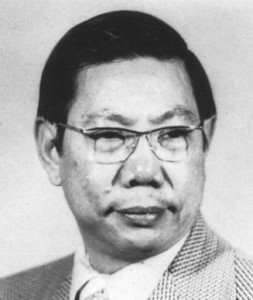
1956: De Chinese arts Min Chiu Li (foto van sidmukherjee.com) behandelt uitgezaaid choriocarcinoom (placentakanker) met methotrexaat. Nadat de kanker ‘verdwenen’ was, zag hij aan de aanwezigheid van HCG (dat door die kankercellen wordt geproduceerd) dat er nog zulke cellen moesten zijn, en ging door met zware chemotherapie tot er geen HCG meer in het bloed van de zieken te vinden was. Hij werd ontslagen wegens het nodeloos doorgaan met therapie. Dat is tegen de regels, en regels gaan natuurlijk voor. Maar Li’s patiënten werden niet opnieuw ziek, in tegenstelling tot degenen bij wie minder lang was doorgegaan.
1956: In hetzelfde jaar begint Henry Kaplan lymfeklierkanker (de ziekte van Hodgkin) met heel precies gerichte intense röntgenstralen te behandelen. Eveneens in dat jaar herontdekken Richard Doll en Bradford Hill (VK) en Ernst Wynder en Evarts Graham (VS) de veruit belangrijkste oorzaak van kanker: roken. (Mukherjee vermeldt niet dat de Duitse artsen Müller (1939) en Schairer en Schöniger (1943) het verband tussen roken en longkanker al veel eerder hadden vastgesteld; zie het artikel van Proctor en de Duitse Wikipedia.) Dat was het begin van een lange harde strijd tegen Big Tobacco. Andere omgevingsfactoren kunnen ook kanker veroorzaken, vaak via het beginsel dat chronische ontsteking (door contact met asbestvezels, of door maagbacteriën, of door hepatitis B) uiteindelijk kanker veroorzaakt. Maar tabak is nog steeds de ernstigste oorzaak van kanker (en andere ziekten van longen en bloedvaten), en een overheid die het roken zou kunnen uitbannen zou een enorme stap voorwaarts doen in de strijd tegen kanker.
1958: In Afrika ten zuiden van de Sahara blijkt het virus (EBV) dat de ziekte van Pfeiffer veroorzaakt, medeschuldig te zijn aan een vorm van lymfeklierkanker (Burkittlymfoom), hoogstwaarschijnlijk in combinatie met iets anders zoals malaria. Immers, ongeveer 80 procent van de westerse mensen maakt een infectie met EBV door. De eerste ontdekker van een kankervirus (Peyton Rous) krijgt 55 jaar na dato een Nobelprijs in 1966. Maar het idee dat kanker door virussen wordt veroorzaakt, blijkt een doodlopende weg. De virussen blijken bij nader inzien ontsnapte oncogenen te bevatten.
1960: Vincristine uit de roze maagdenpalm (uit Madagaskar) wordt ontdekt. Het werkt speciaal tegen leukemie door de spoel van microtubuli te saboteren die bij celdeling de chromosomen uit elkaar trekt.
1961: Proeven beginnen met een combinatietherapie met vincristine, amethopterine, MP-6 en prednison: VAMP. De therapie beloofde eerst duurzame genezing van kinderleukemie, maar in veel gevallen bleken er ook in de hersenen kankercellen terecht te zijn gekomen. Wegens de bloed-breinbarrière konden de chemotherapeutica die niet bereiken en gingen de kinderen een paar jaar later toch dood. De therapie werd uitgebreid met bestraling van de hersenen en injectie van methotrexaat in het hersenvocht, alles bij elkaar een vreselijke therapie. Maar in 1979 bleek dat 80% van de kinderen echt genezen werden.
1962: De ontdekking van paclitaxel (Taxol) begint met de waarneming dat een extract uit de bast van een bepaalde taxussoort tumoren bij muizen remt. Vijf jaar later is de actieve stof geïsoleerd, en gaat men op zoek naar een manier om die op een efficiënte manier te maken. Meer over de geschiedenis van Taxol in Wikipedia (in het boek wordt het maar even genoemd).
1967: Er zijn al lang twijfels aan het nut van de radicale operatie van Halsted, en een vergelijkend onderzoek tussen de ‘ouderwetse’ radicale operatie voor borstkanker en minder ingrijpende procedures al dan niet in combinatie met bestraling gaat van start. In 1981 blijkt dat de erg verminkende radicale mastectomie geen meerwaarde had in termen van overleving en uitzaaaiing. Negentig jaar lang was een overmatig zware therapie toegepast, eenvoudigweg omdat niemand eerder op het idee gekomen was na te gaan of het ook een beetje minder kon.
1968: Sommige vormen van borstkanker blijken gevoelig te zijn voor oestrogeen. Daar gaan ze harder van groeien. Maar tamoxifen (gepatenteerd in 1962) blijkt aan de oestrogeenreceptor van zulke kanker te binden, zonder die te activeren. Daardoor stoppen die kankercellen met groeien en verschrompelen ze zelfs.
1970: Ontdekking van retrovirussen door David Baltimore en Howard Temin; het Rous Sarcoma Virus is zo’n virus (veroorzaakt kanker bij kippen).
1973: Proeven beginnen in Milaan om te zien of operatie plus chemotherapie beter is dan alleen operatie, in geval van borstkanker in een vroeg stadium. In 1975 is al duidelijk dat chemotherapie de terugkeer van kanker met ongeveer een derde kon verminderen. De proeven kunnen niet in de VS gedaan worden, omdat daar teveel ruzie is tussen chirurgen en chemotherapeuten. Later (1981) blijkt dat speciaal bij vrouwen boven de vijftig tamoxifen ook een toegevoegde waarde heeft.
1974: Uitgezaaide teelbalkanker blijkt wonderbaarlijk te genezen, mede door gebruik van het nieuwe middel cisplatin. Rond deze tijd zijn er veel nieuwe chemotherapeutische middelen ontwikkeld.
Eind jaren 1970: Ontdekking van de functie van het src-gen. Dit maakt een zogeheten kinase. Dat is een molecuul dat werkt als een schakelaar die tal van functies in de cel kan aanzetten. Als dit kinase defect is (doordat het door een fout gen afkomstig van een virus wordt gemaakt) zet het gewoon alles aan, onder andere celdeling: de proto-oncogentheorie van Varmus en Bishop. Andere oncogenen volgden, bijvoorbeeld ras in 1982. Tegenwoordig zijn er wel honderd van die genen bekend. Sommige zetten normaal de celdeling aan, andere zijn juist remmen op celdeling of zorgen voor zelfmoord van de cel als die niet meer goed werkt. Als zulke genen door mutatie kreupel worden kan een cel veranderen in een tumorcel. Weer andere mutaties maken dat de tumor voorzien wordt van bloedvaten, of dat de cellen kunnen uitzaaien. Er zijn veel van dat soort mutaties nodig voor kanker ontstaat.
1980 en later: De palliatieve zorg, met nadruk op wetenschappelijk verantwoorde pijnstilling en medicijnen tegen misselijkheid (veroorzaakt door chemo) begint op te komen. Speciaal in het VK komen er veel hospices.
1982: Een nieuwe therapie bestaat erin dat het beenmerg van een patiënt wordt afgetapt; daarna krijgt hij of zij zulke zware chemotherapie dat het beenmerg afsterft en de chemotherapie dus zelf geen leukemie kan veroorzaken. Na afloop van de chemo (als de patiënt niet aan een infectie is overleden) wordt het afgetapte beenmerg weer teruggetransplanteerd. De resultaten waren zo veelbelovend dat allerwegen in de VS patiënten van hun verzekeraars eisten dat deze de experimentele therapie zouden vergoeden. In 1993 werden hun rechten zelfs in een wet vastgelegd. Het was bijna onmogelijk om nog deelnemers aan een proef met loting te krijgen. Het enige zeer gunstig verlopen onderzoek uit 1999 (Zuid-Afrika) bleek frauduleus en vier jaar later, toen er eindelijk een definitief fatsoenlijk onderzoek was gedaan, bleek dat deze methode geen enkel voordeel bood. Ondertussen waren er wereldwijd 40.000 vrouwen met borstkanker mee behandeld (kosten circa 100.000 dollar per patiënt).
1986: APL is een zeldzame vorm van leukemie, veroorzaakt door een specifieke mutatie, waardoor de witte bloedlichaampjes niet uitrijpen. Het blijkt dat deze vorm van kanker met retinolzuur (de zure vorm van vitamine A) te behandelen is. De reden: retinolzuur bindt zich aan het foute enzymproduct van het gemuteerde gen. In hetzelfde jaar wordt ontdekt dat sommige soorten borstkanker een overactief (gemuteerd) gen hadden genaamd Her-2. De firma Genentech ontwikkelde in 1988 een Her-2-antilichaam: een stof die zich stevig bindt aan het product van dat gen. Dit antilichaam (Herceptin) had een groot effect op die speciale soorten borstkanker. Aanvankelijk werd Herceptin toegepast bij patiëntes met borstkanker in een gevorderd stadium. Maar in 2003 werden twee onderzoeken gestart die tezamen lieten zien dat meteen toepassen van Herceptin de aantallen die overleefden met een derde deden toenemen.
1998: De firma Novartis heeft Gleevec (imatinib) geproduceerd. Het werkt in de reageerbuis tegen CML, een vorm van leukemie die ‘chronisch’ is, dat wil zeggen pas na drie tot vijf jaar doodt. Het is weer zo’n stof die zich bindt aan een product van een gemuteerd gen. Daar was de stof expliciet op ontwikkeld. Novartis heeft echter geen zin in de uiterst kostbare proeven, want in de hele VS krijgen maar een paar duizend mensen per jaar CML. Dan is een investering van 200 miljoen dollar in proeven om het middel goedgekeurd te laten krijgen wel een grote smak geld. Uiteindelijk stemt men toch toe om het uit te proberen op een honderdtal uitbehandelde patiënten. Het was een enorm succes. Gleevec is het soort wondermiddel waar een oncoloog van droomt: vernietigt de kankercellen en laat gewone cellen ongemoeid. Maar onherroepelijk ontstaan er dan toch cellen die Gleevec-resistent zijn, door een nieuw mutatie van het al gemuteerde gen. Daartegen is weer een nieuw middel ontwikkeld: dasatinib (2005). Inmiddels zijn er al zo’n twee dozijn van dit soort stoffen ontwikkeld.
2000: Weinberg en Hanahan geven een lijst van zes eigenschappen, elk ontstaan door aparte mutaties, die een kankercel kenmerken. In kankercellen zijn meestal tientallen of zelfs meer dan honderd mutaties aanwezig, maar bijvoorbeeld slechts tien die het kankergedrag veroorzaken. Dat het er zoveel zijn, komt onder meer doordat bij de celdeling wel eens wat misgaat en kankercellen delen zich heel vaak. Maar hoe ingewikkeld het uiteindelijk toch is, ziet men afbeelding 2 in het hierboven geciteerde artikel van Weinberg en Hanahan.
Er zijn onderzoekers die denken dat het mogelijk moet zijn alle genfouten op te sporen die betrokken zijn bij kanker, en antistoffen te maken tegen elk ongewenst genproduct. Of dat lukt is de vraag. Kankercellen muteren soms verder tot ze die antistoffen helemaal niet meer binnenlaten. Eerdere grootscheepse plannen zijn ook op niets uitgelopen. James Watson dacht in 1969 dat een ‘oorlog tegen kanker’ een onzinplan was. Maar in 2009 was hij, getuigend voor het Amerikaanse Congres, aanzienlijk optimistischer. In elk geval is de biochemie van de kankercel grotendeels opgehelderd, zei hij.
Oorspronkelijk was dit artikel gepubliceerd op het (oude) Skepsis-blog en bestond de mogelijkheid om daaronder in discussie te gaan, waar geregeld uitvoerig gebruik van werd gemaakt. De discussie onder dit bericht kan de geïnteresseerde teruglezen in deze pdf (30 pagina’s).
Transcript van interview Charlie Rose met Mukherjee:
Wednesday 11/24/2010
Charlie Rose: It is now estimated that one out of three American women will get cancer during her lifetime and one out of two American men will get cancer in their lifetime. In some countries, it has already surpassed heart disease as the leading cause of mortality. Joining me now is Dr. Siddhartha Mukherjee. He is a cancer physician and assistant professor of medicine at Columbia. The new book is called The Emperor of all Maladies – a Biography of Cancer. Drawing upon his own experiences with patients, he presents a textured portrait of the disease and its 4,000 year history. I am pleased to have him here at this table for the first time. Welcome.
Siddhartha Mukherjee: Thank you so much. Thank you.
[CR]: Why did cancer need a biography? [SM]: Well, I started writing this as a history of cancer. The book really grew out of a question a patient had asked me. And the question was – she was a woman who had been battling abdominal cancer, and she said to me “I’m willing to go on, but I need to know what it is that I’m battling. I need to know what I’m fighting.” And so the book is a 600 page – [CR]: Answer to her question. [SM]: An answer to her question. But the word “history,” which is how I originally had imagined the book, a history of cancer which is in some ways what it is, just seemed too inert, because as I was writing the book I was taking in the stories of patients, my patients, the history of patients. And it really seemed I was sort of looking not at something but at someone. And hence the word “biography.” [CR]: The first-known cases of cancer? [SM]: We know very little about the ancient history of cancer because we don’t have the tissue. We only know it metaphorically from writing. And we can only surmise when this history begins. The very first time the history begins goes back to the oldest surgical and medical textbooks that we possess as human beings, and one of them is the Edwin Smith Papyrus, which was first written about 2,500 B.C. And there’s a description of what might be a case of breast cancer in that papyrus, but we don’t know. [CR]: When do we know? [SM]: Well, w don’t know until much, much later. I mean, the word “cancer,” again, it’s a very rich metaphorical word, comes from the Greeks. They call it cancer because Hippocrates famously thought that the lump of cancer, the tumor, was like a crab under the skin. It was a crab, and hence the cover. And the blood vessels that were around the cancer, the tumor, were like the legs of the crab, and the crab was dug underneath, much as you might find when you go to the beach you might find a crab under the sand and you can only see the impression of the crab, the shadow of the crab. And so hence the word “cancer.” But even what Hippocrates called cancer may or may not have been cancer. Again, we don’t know much later until the 18th or early 19th century when we really begin to describe the disease in cellular terms. And that’s when we really know it’s real cancer. [CR]: So a patient says to you “Doctor, I’ve been diagnosed as having cancer.” [SM]: Yes. [CR]: What is it? [SM]: Well, I think the fundamental thing that it is, is that it’s a pathological proliferation of cells, occasionally cells that don’t know how to die, but certainly cells that don’t know how to stop dividing. And that pathological proliferation of cells is a process that starts up typically in a single cell and it goes and multiplies over and over again. And every generation produces kind of a little evolutionary cycle such that you get more and more evolved cells. So that’s what cancer is. But that said, I would immediately stop them and say “But every different cancer has a different face.” So although there’s a deep commonalty between this very different kind of cancer, prostate cancer, breast cancer, leukemia, although they’re connected at the cellular level, I would also say that they’re very, very different faces. And, again, hence the term “biography,” this is an object with many faces, and it’s an attempt to try to reconcile these very different kinds of faces of cancer. [CR]: And many causes for each cancer? [SM]: Absolutely. [CR]: And many genetic causes for each cancer? [SM]: Genetic and environmental causes for each cancer, absolutely. [CR]: And you believe that we will find prevention? Cure? [SM]: I’m optimistic about the fact that we will find preventative mechanisms and cures for some cancers. I don’t think that there will be a single magic bullet. Again, remember, in the 1970s there was this idea – actually it’s an ancient, an old idea from the 19th century – that there would be a single magic bullet, the so-called penicillin for cancer. This phrase was bandied about a lot, and it’s really been laid to rest, I think. We will never find a penicillin for cancer. But that said, we will convert some cancers into chronic diseases during our lifetimes? I think the answer is yes. We already have, actually, to some extent. [CR]: Part of your technique here is to personalize it. [SM]: Yes. Part of the writing of the book for me – for me, the book would only be written if it became a journey of my own discovery. And part of that discovery always was, who’s the patient? Where is the story of the first patient, the first man, the first woman? And let me tell you one very quick story, which is sort of a metaphorical story, very central to the book. I became obsessed with finding the very first patient that Sydney Farber treated with chemotherapy, actually, one of the first patients in the history of the world, in the history of medicine to be treated with chemotherapy. And all I knew was his name was R.S. I knew nothing about him. I knew he was in Boston and he had leukemia, he was two years old. And I began to look for R.S. because I needed his story to write this book. And I tried to send out e-mails through list serves. Nothing. So I got dejected. And I took to Delhi, to India, where my parents live. And someone said this famous medical biographer of cancer lives a few doors down from where I live in India. This is, again, 1,000 miles away from Boston. And I went to him and I said, you know, I’m interested in this story. And he said oh, I went to Sydney Farber’s clinic 1950, and I have a roster of these patients treated in 1950. Would you like that roster? So here I was 1,000 miles away from where I thought I would find something. And I found the name, I ran back – I mean I flew back, but I sort of ran back to Boston. And I could then find R.S., his name turned out to be Robert Sandler. And I could find a picture of him in the “Saturday Evening Post” from Boston, and I could find his house. And about 15 minutes later I was standing in Robert Sandler’s house. So for me that was – became metaphorical for writing the book. It became – because I said to myself, well, the only way this book is going to be written is if I find story upon story of these first patients. Where are where were they? Where did they live? And I had to go to those places in order to write the book. [CR]: It also gives you a narrative. [SM]: It give you a narrative. In fact, the book is dedicated to Robert Sandler, who lived for three years. And it says “To Robert Sandler and those who came before and after him,” because he begins this journey. [CR]: You went to Oxford. You’re a Rhodes Scholar. [SM]: Yes. [CR]: How did you go from Oxford to medicine? [SM]: Well, actually, I had already applied to be in medicine before I went to England, actually. The Rhodes came as a benign an very welcome boon of lightning to me. And so I decided to take a detour, and at medical school there were more than happy to oblige my going – [CR]: And were you better off because you had that addition to your own liberal arts education? [SM]: I was. At Oxford – I actually went to Oxford initially thinking I’d study philosophy, but then I studied cancer biology, cancer immunology. So already, you know, in some ways I came to medicine in sort of the opposite direction. I didn’t start medicine with patients, I started medicine with cells. And that actually informs this is book in very complex ways, the idea that you could begin from the microcosm and expand out to the macrocosm from cells to patients. Literally, it is an important element to this book. So I thought my own journey from Oxford to studying cells under the microscope to the first time sort of being struck by seeing the first patient in medical school was an important personal journey. [CR]: Now that the book is finished, what’s your obsession? [SM]: I’m back in the laboratory. The nice thing about being a doctor, being in a laboratory is it keeps you humble. I was telling someone the other day, I’m on the book tour, but on the 23rd I open the book somewhere and then I fly back and I’m immediately on call for being at Columbia because it’s Thanksgiving weekend. So, as you know, medicine doesn’t wait for anyone. And it’s a very good reality check before you get too crazy about your own book. There’s always the patient waiting for help and opinions. [CR]: Is there something really remarkable about cancer cells? [SM]: It is a astonishingly adaptive moment that allows a cancer cell to come out of our bodies. You know, the seminal discovery which I noted in the book, the seminal discovery of cancer biology is that typically – though not always – typically cancer is caused by the activation of genes that are already in each and every one of our cells. Now, when that discovery occurred – [CR]: The activation? [SM]: The activation or inactivation of genes that are already present in every cell. So it’s not as if cancer occurs because some virus – typically. There are cases that are certainly that. But not as if cancer occurs because – [CR]: Go ahead – because something turns on a cell – [SM]: Inappropriately, or turns off inappropriately inside every cell. But the things that are turning on and turning off are genes that have profound normal functions in every cell. So in other words, it’s, again, the analogy has been made the cancer is like a car. When the car works – the cancer cell is like a car. When the car works properly its accelerator and brakes are very much a fundamental part of the car. You can’t imagine the car without acceleration and brakes. And yet if you jam the accelerator inappropriately, or if you snap the brakes inappropriately, then this car – which is adapted to accelerate and stop – begins to become unable to accelerate and stop. And that’s of course – [CR]: It has a life of its own. [SM]: Exactly. And you’ve got to admire the extraordinary mechanism that’s inside every one of our cells that allows this automatic process of acceleration and braking happen normally. The fact that we grow up as these incredible multi-cellular organisms — I mean, sometimes I say to myself it’s extraordinary that we’re not exploding with cancer. It is an extraordinary adaptive moment in our evolving as multi-cellular organisms that these accelerators and brakes don’t get broken all the time. And therefore you have to admire what an extraordinary thing it is when this event does occur inside a human body, when eventually a cancer cell does grow out. [CR]: What’s the key to finding a cure and/or treatment? [SM]: Well, the key, really, is to go back into the fundamental biology of the cell. It’s to return back to the mechanistic understanding of what cancer is and to find out, well, what are the mechanisms? What are the accelerators and what are the brakes, and how do those accelerators and brakes, to use this analogy, differ from breast cancer cells to leukemia cells. So again, to go back and find the exact alterations that occurs — [CR]: Have we found it in any particular cancer? [SM]: Well, we’ve found in the many cancers. The picture is still incomplete, but we found in the many cancers. We know, in fact, the cancer genome project, which is really the converse of the normal human genome project, is precisely directed to asking this question. I just to remind you, the cancer genome project is, of course, a catalog of – producing a catalog of all the mutations that occur in the cancer cell compared to a normal cell. So when you have that entire catalog laid out, you can say well, this breast cancer has mutations in gene x, y, z, and a. This other breast cancer cells may have mutations in genes p, q, x, and z, and thereby recategorize the entire universe of cancers in terms of these fundamental genetic changes to genetic mutations. [CR]: So what happens when you have something like Gleevec? [SM]: Amazing things when you have a discovery like Gleevec. You have this targeted drug that goes in and kills every single tumor cell but happens to spare every normal cell in the body. There’s a lovely analogy that’s made in the book with Roger Banister’s running of the four-minute mile. For generations people would say you can’t run a four-minute mile. That’s not because you’re not running fast enough. It’s because the human lung is fundamentally designed such that you can’t run faster than four minutes, or the human muscle is fundamentally designed so it’s a natural limit. And of course the same thing would be said about cancer. They would say you never find any specific therapy for cancer. You have to use these poisons because cancer cells are just too similar to normal cells. And into this world bursts a drug called Gleevec. And Gleevec is exactly that. It’s a drug that can go and target that mutated cell and kill it while sparing every normal cell. And so – [CR]: If we do it one time, why can’t we do it – [SM]: Well, that picture I just painted is a little bit simple, because in some cancers, like CML, leukemia, the leukemia that happens to be targeted by Gleevec, in fact the driving gene, the driving mutation, the accelerator, if you will, is relatively well known, well characterized. In other cancers it might be much more complex. It might be several accelerators that are broken and several brakes that are missing. And if that’s the case, then imagine finding a drug to each one of them. That gets pretty complex. [CR]: Everybody says early detection is important. What makes it important? [SM]: Well, what makes it important is that cancer is a disease that metastasizes, and it’s actually typically – not always, but typically it’s metastasis that kills patients. It’s metastatic cancer that kills patients. So if you can track the cancer in its earliest form before it moved elsewhere in the body, if you can get the crab while it’s still locally under the sand and you can remove it, then you essentially have the capacity of being cured. [CR]: And that’s what happens? [SM]: And that’s what happens when an early tumor is detected by a mammogram, for instance. What you’re trying to do in a mammogram is you’re trying to say that’s a very early stage cancer. Let’s take it out before it spreads. The reason that doesn’t work all the sometime that even small tumors can spread. So size makes a difference. Early stage tumors can be detected by mammograms, but not every small tumor is in an early stage. It may have spread and therefore metastasized outside the breast. [CR]: Where are we in stem cell therapy? [SM]: Well, the answer with stem cell therapy is one of the things that’s very striking about the new biology of cancer is the analogy between cancer cells and stem cells. And by that I mean the genes that happen to drive many forms of cancer happen to be also active in certain adult and embryonic stem cells. So there’s an analogy here. And it’s this analogy that’s being rapidly and deeply explored in the laboratory to try to find out could we take the insights that are coming out from stem cells and apply them to cancer cells? [CR]: And? [SM]: And the answer is, well, yes. Yes they are. I can give you a couple of examples. There are genes that actually very active part of our laboratory and other laboratories explores the gene that actually is very fundamentally involved in fruit fly embryo genesis. And when you look at that gene and you look what happens in cancer – it’s highly active in cancer cells. So it’s a reminder, not only a biological reminder but a political reminder that evolution is connected. And what’s worthwhile in fruit flies is very important in a cancer cell. We’re trying to find mechanisms to actually attack those genes right now. [CR]: If you look back over the next 20 years, could we have done things that were obvious and didn’t do beyond spending more money to have brought it to – brought us to a much better place? [SM]: Absolutely. Well, let’s just talk about the question of money for one second. So, you know, the NCI budget is $5 billion, give or take a little change. Now some people think that’s an enormous amount of money. Just to give you a contrast, we spend $900 billion on this war. So the war on cancer is a pittance compared to several military campaigns that the country has run and is continuing to run. So let’s put that into perspective. [CR]: And how many people did cancer kill in 2009? [SM]: Well, 600,000 men and women this last year in America alone. [CR]: You said 600,000? [SM]: That’s right. There you have the number. Could we have done something different in hindsight? The answer is yes and no. We could have been – the war on cancer, particularly this 1972 war was launched with an enormous amount of optimism. The slogan, you might recollect, was “Let’s find a cure for America for its 200th birthday. What a great gift that would be.” There’s a kind of hubris in that statement. There’s a kind of optimism in that statement, of course, but there’s also hubris in that statement. And I think that hubristic quality was actually the problem. Scientists withdrew from the battle front because they thought that they had somehow — that the implication was that this was a cyto-toxic war, a war in which you put lots of poisons in and thereby find the penicillin for cancer. And that was not the case. That is not the case for today. So in hindsight I think the hubristic optimism could have been dampened and people’s expectations would have been a little bit more adjusted to the realities of science. [CR]: Were there ever steps in which people were on the wrong track and had to come scampering back to the right direction? [SM]: Absolutely. The book is about many such steps. I’ll give you one example. The famous radical mastectomy arises from this notion if something is good than more has to be better. [CR]: Right. [SM]: So in the late 19th century the idea was that if you could take — if a breast tumor was discovered, then you would do the most radical surgery possible, excavating not just the breast but the tissues around it, the muscles, actually in some cases the collarbone to try to stave off cancer. It took 90 years to disprove that theory, 90 years and hundreds of thousands of women’s bodies to disprove that theory. And part of the reason was who would opt for non-radical surgery? The word itself became a conceptual trap. If you were given the option, well, Mr. Rose, we’re going to do the option of radical surgery versus non-radical surgery for cancer, which would you choose? [CR]: Radical. [SM]: Exactly. [CR]: Make sure you get it. [SM]: Exactly. But it was actually patient advocates who began to question this and say why haven’t we run a trial of this? Why is it that this must be the right approach? Why haven’t we run a trial? Betty Rollins famously said, wait a second, this is a radical procedure that’s occurring on women’s bodies. Why don’t we go back and revisit and put it to a clinical test? And the clinical tests were done and it was absolutely negative. Absolutely negative. There was no difference between a local mastectomy, between that and radical mastectomy or a lumpectomy, the radiation, and even less radical surgery. [CR]: Relapse happens. [SM]: Yes. [CR]: Why does it happen? [SM]: The quick answer is we’re not sure. It happens because of several mechanisms. One of them is, of course, the Halstead mechanism, which is that the tumor hasn’t been excavated enough. We haven’t taken it out. That’s local relapse. The second reason it happens is that cancer cell grow resistance to drugs. So that’s relapse of resistance. But perhaps the most controversial and most interesting idea being advanced, and I’ve written about this a little in the book, is that cancers also possess stem-like cells. So these are cells sort of like the roots. [CR]: Smoking is a cause? [SM]: Absolutely smoking is a cause. [CR]: Every doctor says that. [SM]: Yes. [CR]: And not that there’s a question about it. Their reaction is exactly like yours. [SM]: Yes. Yes. Someone recently asked me, well, what preventative things should I do in order to – what five preventative things should I do in order to not get cancer? I said the five are stop smoking, stop smoking, stop smoking, stop smoking, stop smoking. [CR]: And there are certain stories about that. If you have not smoked for 10 or 15 years then – [SM]: Well, there appears to be the situation where if you stop smoking for several years, you actually revert back your risk somewhat to the normal range. In fact, even if you are smoking, it’s important not to be nihilistic about it and say, well, there’s more to come, and that’s stopping, quitting, can make a difference to your prognosis. I mean, the story of how smoking got discovered as a – how tobacco smoke got discovered as a carcinogen as told in this book is an amazing story. [CR]: What’s the story? [SM]: Well, the story is that smoking had become so common at one point of time that you couldn’t discern a link between smoking and cancer. It was like as Richard Pito, the epidemiologist once said to me, it was like asking is there a link between sitting and cancer? Everyone sits and some people get cancer, so how could you possibly run a study to discern the link between sitting and cancer? And it was the two scientists – actually, two pairs of scientists, Winder and Graham in America, and Dole and Hill in England who really uncovered this link. Winder and Graham are very interesting characters. Graham was an important surgeon. He actually had devised a mechanism. He invented the removal of the lobe of the lung for lung cancer. And when Ernst Winder, who was a student, went up to him and said “Well, do you think there’s a link between smoking – you know, smoking is going up, lung cancer is going up. Could there be a link?” And Graham famously said “Well, so has the use of nylon stockings.” So how could there possibly be a link? It had become invisible. And it was through these careful epidemiological studies in which they followed doctors – it happened to be a group of doctors – prospectively over time that they began to discern the link that those who smoked died of lung cancer while those who didn’t smoke didn’t die of lung cancer. So it was an incredibly careful epidemiological study. [CR]: What’s the most deadly cancer? [SM]: Well, the list of culprits is quite nasty. But, you know, among the big ones these days is pancreatic cancer. [CR]: Why is that? [SM]: Well, again, we’re not sure we know. Part of the reason we think is that for some reason chemotherapies or even other drugs don’t seem to get into these tumors very easily. So one reason has to do with that, but that’s not the only reason. There are other reasons as well. The genetics of this tumor are probably quite complex — many, many different accelerators and brakes broken, as it were. And so getting therapy against this tumor is another problem. And the third reason is it’s very insidious. It often doesn’t get detected. There’s no easy detection test. It’s not like you have a mammogram for pancreatic cancer, so it presents very insidiously, typically in very advanced stages. [CR]: Is there any hope we will have some kind of detection system? [SM]: Well, absolutely there are hopes that we can have detection systems, and they already abound. There’s colonoscopy for colon cancer, mammograms we talked about. Recently a very, very tantalizing study which was halted early because it was so strikingly positive from the National Cancer Institute which looked at high-risk smokers and asked the question if you do CAT scans in these smokers can you detect lung cancer? And the study was strikingly positive. You can detect early stage lung cancers and increase survival. You don’t need a tissue for that. You just do a scan and try to find – [CR]: And where are we on understanding how frequent you can take scans and how frequently you can’t and what’s the radiation impact? [SM]: The radiation impact is sizable. It’s worthwhile thinking about it. And in fact, one of the things, if you go to the National Cancer Institute website, which describes this study, it raises the question, how often should we be doing these scans, because there’s a real risk of radiation. So again, like any other story in this book it has to be balanced against what the risk factors are. [CR]: Are we looking at some possible technological breakthrough that we’re working towards that may happen which will give us a leg up? [SM]: Absolutely. We’re looking for those technologies. But that requires – long before technology, let’s talk about the substructure of technology. The substructure of technology is getting people interested in science. The substructure of technology is how do you create technologies that will allow us to battle cancer in the future? And that’s something that’s a challenge facing us as a nation. And one last point is that technology can be more complex than a CAT scan, or it can more complex than a new medicine. Very famously I profile Cecily Saunders, the woman who invented I – would say invented palliative care. Palliative care is also a technology. It didn’t exist, and a British nurse turned physician had to launch a movement because again the 1960s the hubristic optimism about curing cancer was so dense that someone had to say, wait a second, who’s going to take care of patients? Who’s going to take care of pain? How are we going to take care of men and women who have no hope in terms of cure and make them live dignified lives through the end? That, too, is technology, right? And so one of the things that we learned from this book is that technology comes in many, many different forms and each one of those forms has to be invented. [CR]: As you may know from the “Brain Series” that we do here we always ask this question. [SM]: I love that series. [CR]: Thank you. What is the one question you most want to find the answer to? [SM]: Well, the one question that I think is really burning right now is how one converts the wealth of genetic information that’s slowly coming out of these cancer genome projects into therapy and prevention mechanisms, how does one do that? And what is the best way to engage a new generation of which chemists to make new drugs? Can we invent new mechanisms which we can find early signs so that we can prevent cancers? Can we essentially create preventative mechanisms that live in a Petri dish so that we don’t to launch enormous epidemiological studies until the cancers actually come out in the population to say, oh, my goodness, it must have been asbestos, or, oh, my goodness, it must have been smoking. So I think in every direction prevention and therapeutic directions, we need to try to find out how to connect the wealth of information from this project towards finding prevention and therapy. [CR]: “The Emperor of all Maladies: A Biography of Cancer,” Siddhartha Mukherjee, thank you very much. [SM]: Thank you for having me on the show. [CR]: This is an extraordinary book.